
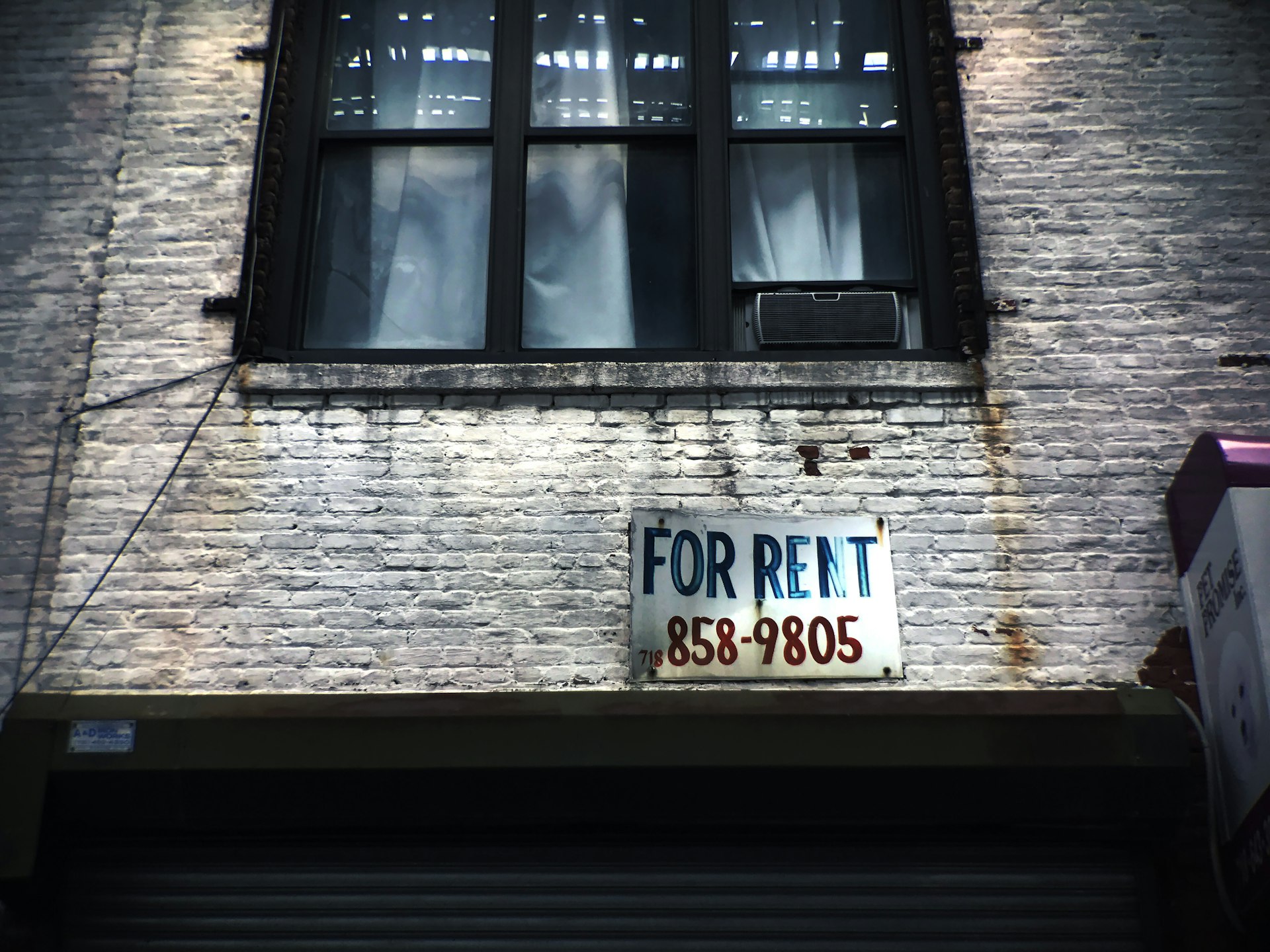
On November 3, Akron voters passed two charter amendments that change how renting works in this city. Issue 11 bans rental application fees and lets tenants pay a security deposit in installments over as many as six months. It passed with more than 57% of the vote. Issue 12 makes criminal history a protected class in housing, with exceptions for arson and sex offenses. It passed with 50.9%, and those totals are still unofficial. (Signal Akron has the full rundown.)
I own rentals in Akron. I also spent years as a landlord in Los Angeles before I got out. So here's my take, and I'll give you the short version up front:
You can't make risk disappear by banning the tools landlords use to price it. It moves into the rent, and every tenant pays it, including the good ones.
Risk is a lot like water in an Akron basement. You can paint over it. It's still coming in somewhere.
First, the problem is real
I want to be fair about this, because the people who wrote these amendments aren't making things up. Application fees add up fast when you're applying to place after place. One tenant in the Signal Akron story said fees cost him about $300 in five weeks after he got out of prison. That's a real number for someone starting over, and it buys him nothing if he gets turned down everywhere.
Part of this is already solved, and it didn't take a ballot measure. Zillow has a reusable rental application. A tenant fills it out once, pays $35, and can use it to apply to as many participating rentals as they want for 30 days, background check and credit report included. Landlords who take applications only through Zillow aren't charging anyone a fee per door. A renter applying to ten places pays $35 total, not $350. The fix for fee stacking already exists. It just needs more landlords using it.
And plenty of people with an old record make perfectly good tenants. Even Mayor Malik, who opposed both issues, said the problems behind them are real and that the charter was the wrong tool.
So I'm not here to argue nobody should care. I'm here to argue about where the cost lands.
A landlord has three levers
When I decide whether to rent to someone, I'm managing risk with three tools:
- Screening. Rental history, income, background. The application fee pays for it.
- The deposit. My cushion if the unit comes back damaged or the rent stops.
- The price. The rent itself.
Issue 11 removes the money that pays for screening and weakens the deposit. Issue 12 takes part of the screening off the table. That leaves one lever, and it's the one every tenant pays.
We didn't have to wait long to see it pulled. In that same Signal Akron story, an Akron landlord with dozens of homes said she's raising rent from $1,000 to $1,200 a month. That's $2,400 a year from every tenant in every unit, to cover risk a $1,000 deposit used to handle on its own. The tenant who would have qualified anyway just got the bill.
And for the record, application fees were never a profit center. Nobody ever bought a duplex to get rich off forty-dollar background checks.
In Akron, the landlord already pays the tenant's water bill
This part doesn't come up much, and it should.
Under Akron's own water and sewer rules, the owner is responsible for water, sewer and trash at the property no matter who lives there. If a tenant leaves with an unpaid balance, the city can certify it to the County Auditor as a lien on the house. It shows up on my property tax bill.
Now run the new deposit rule against that. A tenant signs a lease, pays the deposit in six monthly pieces, and moves out in month three. I'm holding half a deposit. Meanwhile there's a water bill I never ran up headed for my tax bill. Somebody has to pay for that, and the next tenant is the most likely candidate.
Next door in Cuyahoga Falls it works differently. Tenants open their own utility accounts and put down their own deposit, $250 for a single-family house or duplex. To be fair, the Falls still holds the owner liable for water and sewer as a last resort. But the tenant's own account and deposit come first. Akron skips that step and comes straight to the owner.
The state may fix part of this anyway. House Bill 92 would make cities collect unpaid water and sewer from the tenant who signed up for the service, not the landlord. It passed the Ohio House in March and is sitting in the Senate. If Akron wants to lower what renting costs here, supporting that bill would do more than any charter amendment.
Ohio's deposit rule already pushes risky tenants out
On paper, Ohio gives landlords room to work with a riskier applicant. There's no cap on the deposit. Thin rental history, a past eviction, an old record? Ask for two months instead of one, and everybody's covered.
In practice, almost nobody does it, and the reason is buried in ORC 5321.16. If the tenant stays more than six months, any part of the deposit above one month's rent earns 5% interest, and the landlord has to calculate it and pay it to the tenant every year. Get it wrong and the tenant can sue for damages and attorney fees, on top of the 30-day deadline to return the deposit with an itemized list.
A big apartment company has software for that. A guy with three doubles in Kenmore has a shoebox of receipts and a day job. For a small landlord, a bigger deposit doesn't feel like protection. It feels like a yearly math assignment with a lawsuit attached for wrong answers. So most of us take one month's deposit, keep it simple, and turn down the applicant who would have needed two.
That's the part people miss. A rule written to protect tenants already pushes the riskier ones out of the running. Issue 11 now makes even the one-month deposit something you collect in pieces. When a landlord can't make the risk add up, the applicant doesn't get a cheaper yes. They get a no.
I've seen how this ends. In Los Angeles.
I got into real estate by house hacking in LA. I rented out an ADU and a spare room to help cover a big mortgage. California keeps tightening the screws: application screening fees are capped by state law, and since July 2024 security deposits are capped at one month's rent. LA's city council has also voted to move toward a "fair chance" housing ordinance on criminal history.
Add rent freezes and eviction moratoriums on top, and being a small landlord in LA stopped making sense to me. So I sold. That's the part that never shows up in the ballot language. When small owners can't price risk, they don't stay and absorb it. They leave. Rents go up anyway, and the units end up with whoever has the deepest pockets.
Akron's rents are reasonable because a lot of small, local owners can still make the numbers work on older houses. That's a big part of what makes this city affordable. It's worth protecting.
Akron just unlocked 11,286 lots. Who's going to build on them?
This fall, Akron City Council voted unanimously to eliminate minimum lot sizes. It was the right call. When we counted every parcel in the city, the old rule had kept 11,286 vacant lots off limits, on streets that already have water, sewer and sidewalks. The city even released free house plans drawn to fit them.
But a lot isn't a house. Somebody has to put up the money and build it, and in Akron that somebody is mostly small builders and local investors. In a lot of these neighborhoods, a new house costs more to build than it sells for. What makes the math work is renting it out, or living in one side of a duplex and renting the other.
Issues 11 and 12 just made that rental income riskier and harder to underwrite. Less screening, a deposit that shows up in pieces, a water bill the city sends to the owner, and rules nobody can read yet because the city hasn't written them. Then a likely lawsuit on top. Money doesn't have to come to Akron. Cuyahoga Falls, Stow and Barberton are ten minutes away, and none of them changed their rules on Tuesday.
This isn't hypothetical. Before the vote, one developer told Spectrum News they had paused construction on an Akron project because of Issues 11 and 12, and couldn't see a reasonable return with them in place. That's one project before the votes were even counted.
The city spent a year making it easier to build in Akron. Two charter amendments just made it riskier to own what you build. If the lots stay empty, the zoning reform doesn't add a single home, and the people these amendments were meant to help are still looking for a place to live.
What would actually help
If the goal is getting people with thin wallets or old records into good housing, there are better tools than a charter amendment:
- Reusable applications. Zillow's already exists. Get more landlords accepting it, so nobody pays $300 in five weeks.
- Fix Ohio's deposit interest rule. Drop the yearly interest math, at least for small landlords, so a bigger deposit becomes a yes instead of a paperwork headache.
- Deposit assistance the city funds or insures. Help the tenant with move-in costs without moving the risk onto the owner.
- Pass HB 92. Stop making landlords the backstop for utility accounts they never opened.
- Write it as an ordinance, not into the charter. An ordinance can be fixed when it doesn't work. Charter language takes another election.
Issues 11 and 12 take effect 30 days after the vote. The city has 90 days to write the rules that put them into practice, and the Northern Ohio Apartment Association is already talking about legal challenges. A lot of the details are still unknown. I'll update this post as the rules come out if I get a chance.
If you're a landlord thinking about getting out
Some small Akron landlords are going to look at this and decide they're done. I understand. I made the same call in LA.
If that's you, we buy rental houses in Akron and Summit County, tenants in place, as-is. We hold what we buy, and we'll continue leasing to the families already living there. If you want to see what that looks like first, here's our plain-English guide to selling a house as-is in Akron. Call or text (330) 661-9885.
Cover photo by Jose Alonso on Unsplash.