
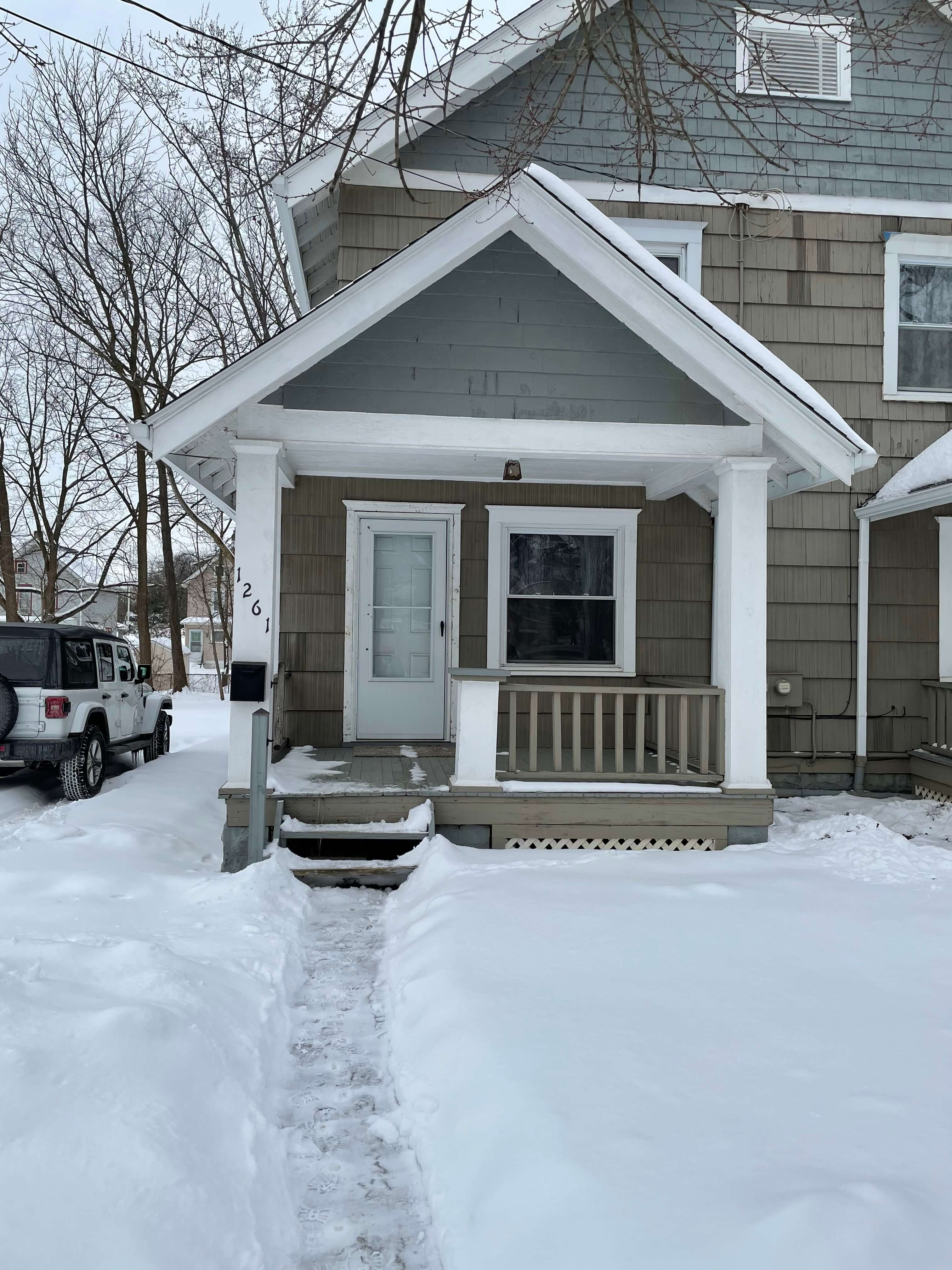
Here's something most Akron renters never get told: you might be a lot closer to owning your home than you think — and the thing standing in your way may not be money. It may just be the bank.
Akron is one of the most affordable housing markets in the country. The typical home here runs somewhere around $115,000 to $150,000 depending on the neighborhood, and homes are moving fast — many go under contract in about a week. Compare that to the national median, which is more than double, and you start to see why so many people quietly become homeowners here on incomes that wouldn't touch a house in most cities.
But there's a catch renters know all too well: getting a traditional mortgage. Thin credit, self-employment income, a past hiccup, not enough saved for a 20% down payment — any one of these can get you a polite “no” from a lender, even when you've been paying $1,200 a month in rent on time for years.
There's another way to buy, and once you understand it, asking for it is a lot less intimidating. It's called seller financing.
What seller financing actually is
In a normal sale, the buyer borrows from a bank, the bank pays the seller, and the buyer spends the next 30 years paying the bank.
In seller financing, you cut the bank out. The seller becomes the lender. You agree on a price, you put down a down payment, and then you make monthly payments — principal and interest — directly to the seller over an agreed term. You get the deed and own the home at closing, just like any other purchase; the seller simply holds a lien (a recorded mortgage) until you've paid them off, exactly the way a bank would.
No loan officer. No underwriting. No 45-day approval. here's a big one, no appraisal. Just two people agreeing on terms. You head it here first!
The Akron math, with real numbers
Let's use a believable local example: a $130,000 Akron home — the kind of solid three-bedroom you'll find all over the city.
- You put 10% down → $13,000 (seller financing down payments are negotiable; banks often want far more on the way they'd structure it)
- The seller carries the remaining $117,000 at 7%, paid over 30 years
- Your monthly payment of principal and interest: about $778
Add in Summit County property taxes (based on the new sale price, yes, they want their pound of flesh) and homeowner's insurance — call it roughly $280–$300 a month combined — and your all-in cost lands around $1,050–$1,075 a month.
Now look at what you're probably paying in rent right now. For a lot of Akron renters, that monthly housing payment is the same or less than what they're already handing a landlord — except now every payment is buying you a piece of the house instead of a receipt, also you've successfully acquired interest payments you can write off against your income.
That's the part that should stop you in your tracks.
(These are illustrative numbers. Your real figures will depend on the price, your down payment, the rate you negotiate, and the specific property's taxes. But they're built on real Akron prices, not fantasy.)
Understanding the loan: amortization (and why it matters)
When you make a monthly payment on a mortgage — bank loan or seller-financed — your payment is split between two things: principal (the chunk that actually pays down what you owe) and interest (what it costs to borrow). The document that maps out exactly how every payment is divided across the life of the loan is called an amortization schedule.
Here's the part most renters don't realize: with a standard bank mortgage, the early years are mostly interest. On a 30-year loan at 7%, your first month's payment on a $117,000 balance is roughly $682 in interest and only $96 in principal. Five years in, you've made about $46,000 in payments and chipped only about $7,000 off what you owe. That's how banks structure loans — frontloaded interest, slow equity build. Great for the bank.
The good news with seller financing: you have room to shape this. The down payment, the interest rate, the length of the loan, and the payment structure are all on the table. A higher down payment lowers everything that follows. A shorter term builds equity faster but raises the monthly. An interest-only structure for the first few years lowers payments but doesn't build equity. Maybe you offer the seller no prepayments for 10 years! None of these are “right” or “wrong” — they're trade-offs you and the seller agree on.
Before you sit down with a seller, play with the numbers yourself. CalculatorSoup's mortgage calculator is a clean, free tool — punch in different prices, rates, down payments, and terms and watch what happens to the monthly. Want to frontload the interest like a traditional bank? Run that scenario. Want to keep early payments low and build equity later? Run that one too. There's no single right answer — that's the whole point of negotiating your own terms. Walk in knowing what each option actually costs and you're already further ahead than most buyers.
Why a seller would ever say yes
This is the question everyone asks, and understanding the answer is exactly what lets you walk in and make the case with confidence. A seller who finances the deal isn't doing you a favor — they're often getting a better outcome than a normal sale. Three reasons:
They can get a stronger price. Because they're offering you something valuable (a way in without a bank), they have room to hold firm on price instead of taking the discount a quick cash sale usually demands. Remember this phrase, "you can have your price, but give me my terms"
They spread out their tax bill. When a seller takes the whole price in one lump, the IRS generally wants the capital gains tax that year. By financing it and collecting over time — an “installment sale” — they recognize the gain gradually, which can soften the tax hit. (Their accountant will confirm the details; it's a real and well-known benefit.)
They earn interest on their own money. Instead of getting a check and scrambling to find somewhere safe to park it, the seller earns interest — that 7% in our example — secured by a property they already know, paid by you, month after month. For an older owner or a tired landlord, that steady income stream can be more attractive than a pile of cash. 7% is way better than the 3.30% on a High-Yield Savings!
So when you ask, you're not begging. You're offering a deal that can genuinely work better for them than the alternative.
How to actually ask
Start with the most likely “yes”: someone who owns the property free and clear. That's an owner with no mortgage of their own to pay off — often a longtime landlord, an inherited-property owner, or an older seller ready to be done with the headaches. They're the ones with the flexibility to carry a note. Plus, here's the reality, tenants who become owners now take responsibility for the property its a good incentive system. (See my other article here about when youre ready to buy)
Your own landlord is a natural first conversation. Something as simple as: “I've been a reliable tenant. I'd love to buy this place, but a bank isn't an option for me right now. Would you consider financing the sale yourself? I think the numbers could work better for you than you'd expect.” Then walk them through the three benefits above.
If your landlord's not interested, the same approach works on any seller of a free-and-clear home — and there are plenty in Akron. Just open Zillow, and look for rentals listed by individuals, not property managers.
What happens on the seller's side (and how we help with the paperwork)
Once a seller agrees, the next question they'll ask is “what do I actually have to do?” Here's the short version, so you can walk in informed:
The sale gets recorded just like any other home sale. A title company runs the closing, the deed transfers to you, and the seller files a mortgage against the property at the Summit County Fiscal Office. That recorded mortgage is what protects the seller — if you stop paying, they have legal recourse the same way a bank would.
The seller becomes the bank. Every monthly payment you make is split between principal (paying down what you owe) and interest (the seller's fee for lending). For tax purposes, this changes the seller's life in two ways:
- The interest is ordinary income. Each year, the seller reports the interest portion of your payments as interest income on their tax return.
- The capital gain is spread out over time. Instead of paying capital gains tax on the entire profit in the year of sale, the seller reports a slice of the gain each year as you pay down principal. The IRS form for this is Form 6252. For a longtime owner sitting on a big gain, this is usually a meaningful tax benefit.
The seller has to give you a year-end interest statement. Just like a bank does. The IRS form is Form 1098 (“Mortgage Interest Statement”), and it tells you (and the IRS) exactly how much interest you paid that year — which you may be able to deduct, and which the seller reports as income. A clean written statement of interest paid is required either way, so the numbers match on both sides.
We help with all of it. Seller is willing but worried about the paperwork, that's the part we make easy. We can point both sides to a local title company, help structure the note and amortization schedule, get the mortgage properly recorded at the county, and produce the year-end interest statements so the seller doesn't have to think about it.
None of that is tax advice — but it's the operational scaffolding that takes “this sounds complicated” off the table. Learn that and you're good to go.
When you can walk into the conversation and say “the paperwork is handled — you'd get clean monthly checks and a year-end statement, just like a bank,” you remove the biggest reason sellers hesitate.
Protect yourself — this part is not optional
Seller financing is a real, legitimate way to buy. But because it happens outside the bank's guardrails, you have to put the guardrails in place:
- Insist on a deed and a mortgage, not a “land contract.” In a proper sale you receive the title at closing and the seller holds a lien. A land contract (contract-for-deed) is different — you don't get the title until you've paid in full, and these have a long history of being used to take advantage of buyers in Ohio. Push for the deed-and-mortgage structure.
- Use a title company and a real estate attorney. Run the closing through a local title company — we regularly work with American Title Solutions at their Fairlawn branch — so you know the property's free of surprise liens. Have an attorney review the note before you sign. The Akron Bar Association maintains a referral list if you don't already have one. This is a few hundred dollars that protects a six-figure decision.
- Get everything recorded. The deed and mortgage should be recorded with the Summit County Fiscal Office so your ownership is on the public record. Don't skip it.
As an owner-occupant buying a home to live in, you also have consumer protections under federal law (the rules around owner-financing exist largely to protect buyers like you) — another reason to keep the deal clean, documented, and professional.
The bottom line
Akron's affordability is a genuine advantage, and the bank's “no” doesn't have to be the end of the story. With the right seller and a deal structured properly, a renter paying $1,200 a month can become a homeowner paying about the same — and start building equity that's actually theirs.
The home might already be under your feet. Sometimes all it takes is knowing the right question to ask.
This article is for general educational purposes and is not legal, tax, or financial advice. Seller financing has real legal and tax consequences that vary by situation and by state. Before buying — or asking a seller to finance — talk to a qualified real estate attorney and accountant, and run the closing through a reputable title company.