
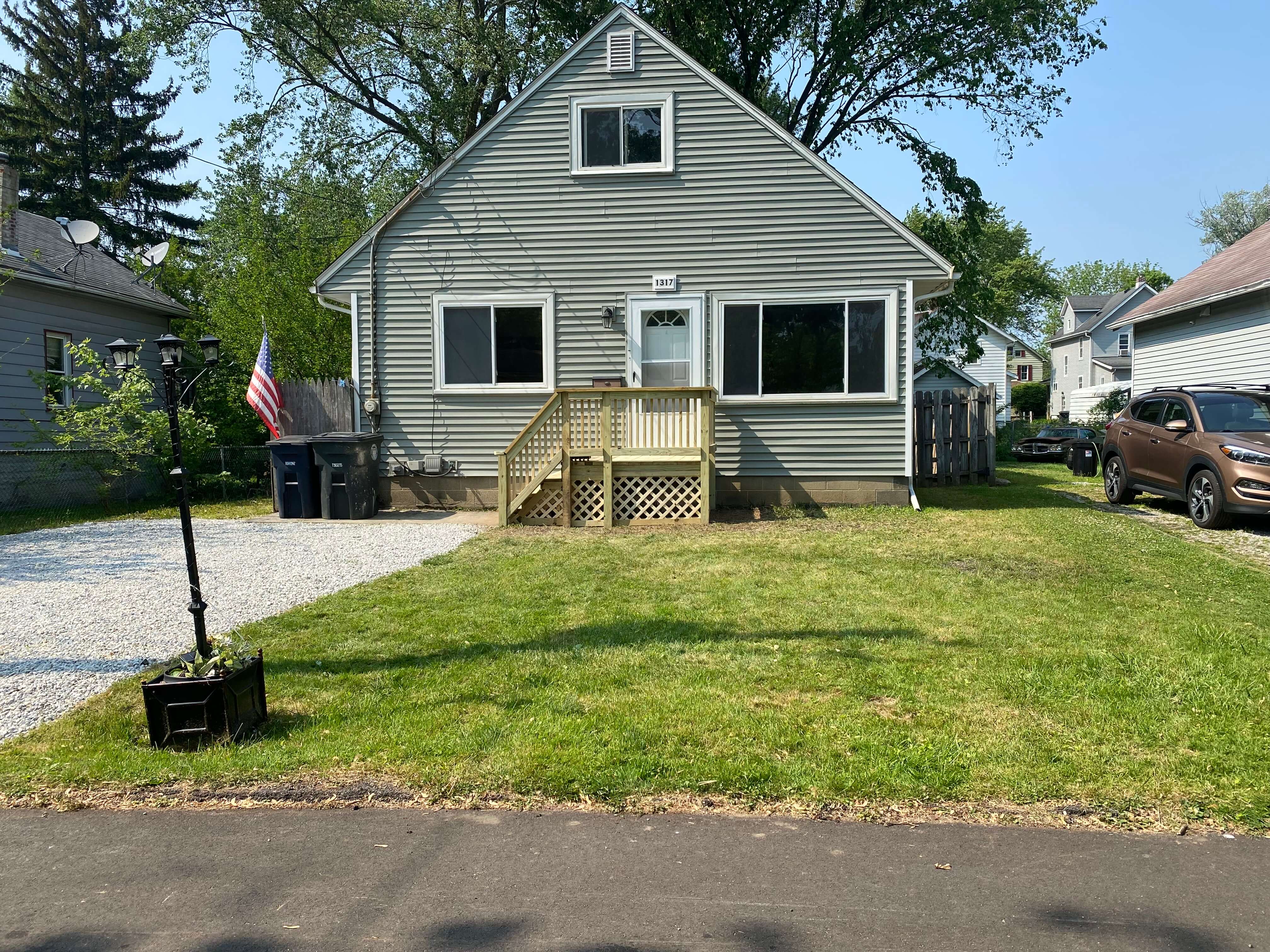
Every few months, one of our tenants or even applicants tells us they’re planning to buy a house. We always tell them congratulations — it’s a good thing, and we mean it. We’ve watched plenty of our own renters become great homeowners.
But there’s a follow-up conversation I never quite get to have out of fear of coming off like a... greedy landlord, lol.
What I want to get off my chest is - The day you buy a house, you become responsible for it.
Every drip, every creak, the lawn, falling branches, every January morning the furnace decides not to start.
The cost of a home is one thing. The weight of responsibility is another. And almost no rent-vs-buy article talks about the second — because the first part, the cost, is what calculators and headlines focus on.
So consider this the conversation I should be having and never quite do. We’ll start where everyone else starts — with the money — because once you understand the real shape of the money, the weight becomes a lot easier to see.
If you only take one thing from this article, take this: the rent you’re paying your landlord is the ceiling on your monthly housing cost. A mortgage is the floor. And the gap between those two things — both in dollars and in everything else — is where most first-time owners get hurt.
The math everyone gets wrong
Every rent-vs-buy comparison I see treats the two monthly payments like they’re the same kind of number.
Rent: $1,600. Mortgage: $1,500. Therefore, buy.
But those aren’t the same kind of number at all.
Rent is the maximum a tenant will pay each month. When the HVAC dies in January, that’s the landlord’s problem. When the roof needs replacing, the landlord eats it. When property taxes jump, when the water heater goes, when a tree drops a branch through the eaves, when the sump pump fails during a March melt — the landlord pays. The tenant pays $1,600 and a small utility bill. Predictable. Capped.
A mortgage payment is the minimum. The owner pays the loan, plus property tax, plus insurance, plus every one of those emergencies above. The first three are knowable. The fourth — capital expenses — is the one that catches first-time owners. Most of them learn it the hard way.
That’s not an argument against buying. It’s an argument for understanding what you’re actually signing up for.
What it really costs to own a house in Ohio
Here’s where I should be honest about my market. We buy and renovate houses across Summit County — and we're holding for the long term. Every property. Which means we live with every shortcut we don’t take, and we pay the bills every month, year after year. So I can tell you what those bills actually look like here.
Property tax. In Akron and Summit County, the effective property tax rate runs around 1.5–1.9%, which puts the typical Akron homeowner at roughly $1,900–$3,300 a year — about $160–$275 per month on top of your mortgage payment, every month, forever.
Roof. Asphalt shingles are what most Akron houses wear. A typical asphalt roof replacement in Akron runs $5,000–$15,000, and most quality architectural shingles around here are realistically in the 20–30 year range — sometimes less, because Northeast Ohio adds ice dams, hail, and freeze-thaw cycles that mild climates don’t deal with. In Southern California, a roof lives in retirement. In Ohio, a roof lives in a fight.
HVAC. A new gas furnace in Ohio typically runs up to $8,500 installed depending on size and efficiency, and a full HVAC system replacement (furnace plus central air) lands closer to $11,000–$14,000. Ohio winters are five to six months of hard running. Mild-climate homeowners don’t have this problem at this scale.
Drainage and water management. This is the one most first-time buyers don’t see coming, and it’s the most expensive when it goes wrong. A sump pump install in Akron runs around $700–$2,500, and full basement waterproofing can run $2,000–$8,000+ depending on what you need. Freeze-thaw cycles, frost depth, and constant ground moisture mean every basement in this region is in some stage of an ongoing fight with water. In Phoenix, this category essentially doesn’t exist.
Everything else. Water heater every 8–12 years ($1,500–$3,500). Driveway. Appliances. Paint. Gutters. (You know we care about gutters) The rule of thumb most lenders quote is 1–3% of your home’s value every year for maintenance and capex combined. On a $200,000 Akron home, that’s $2,000–$6,000 a year you should quietly be setting aside.
Add it up. Property tax, Property insurance, maintenance, and capex on a $200,000 Akron home easily run $500–$800 a month above the mortgage payment itself. None of that shows up in a typical rent-vs-mortgage comparison.
This is what I mean by “the floor.” The mortgage payment is the lowest housing number a homeowner will ever see in a month. Most of the time, it’s noticeably higher.
When renting actually is the right call
After fifteen years of doing this, here are the people I’d tell to keep renting — not because they couldn’t afford a mortgage, but because the total cost of ownership doesn’t fit their life right now.
Busy mid-career people on a steep ramp. If your time is genuinely worth more than the money you’d save owning, and your weekends are about your career, you don’t need to spend them on gutter cleaning, contractor scheduling, and the slow drip of homeowner errands. That’s a legitimate trade-off.
Anyone unsure they’ll be in the same city for five years. Closing costs, agent commissions on the eventual sale, and the time it takes to recoup transaction costs through appreciation usually need 5–7 years to make sense. Less than that, and you’re often better off renting.
Anyone who’d drain their emergency fund to make the down payment. This is the most common trap I see. A homeowner without a capex cushion is one furnace failure away from a credit card spiral. (Don't worry- investors also make this same mistake) If buying means going from a $20,000 cushion to a $2,000 one, the math hasn’t shown up yet — even if the monthly payment looks fine on paper.
When I would tell you to buy
So when would I tell you to go for it?
When the cushion is real. If you can put a down payment together and still have a sinking fund big enough to absorb a roof, an HVAC system, and a six-month gap in your income, the floor doesn’t scare you. That’s when you’re ready.
When you’re planted. If you’re staying in one place five years or longer, ideally longer, you’ll outrun the transaction costs and ride at least one market cycle.
When you’ve already learned how a house actually works. This is the part that doesn’t get enough attention: the best homeowners I’ve seen are the people who were resourceful tenants first. They knew how to reset a breaker, what a clogged condensate line sounds like, when a “weird smell” matters and when it doesn’t.
Renting can be a training ground for ownership if you treat it that way — and the tenants who become the strongest owners are the ones who already built that muscle while someone else owned the deed.
When you’ve run all the numbers, not just two of them. Not rent vs. mortgage. Rent vs. mortgage plus tax plus insurance, plus 1–3% maintenance, plus a real capex sinking fund plus the opportunity cost of your down payment. If that math still works, you’re probably ready.
The honest bottom line
Run the math before you do anything. Redfin’s free rent-vs-buy calculator is a solid starting point — it’ll show you the true breakeven year by year, and lets you tune the assumptions that matter most.
One Ohio-specific tip when you use it: whatever owner costs the calculator shows you, add about 30%. National calculators tend to underestimate the real cost of owning a home in a freeze-thaw climate with deep frost lines, year-round water management, and roofs that work harder than the dry-climate national average.
That’s not a reason not to buy. It’s a reason to buy with your eyes open. The people who own happily are the ones who built their model for the floor — not for the ceiling.
If you’ve been a great tenant, you’ll probably be a great homeowner. Just don’t underestimate what you’re signing up for — not just the cost of it, but the weight of it.