
You just inherited a house.
Maybe it was your parents’ place in Ellet. Maybe it’s your uncle’s duplex in Kenmore that hasn’t been updated since the ’90s. Maybe you don’t even live in Ohio anymore and you’re trying to figure all of this out from another state.
Whatever the situation, you’re probably dealing with a mix of grief, paperwork, and a property you didn’t ask for — and you need to figure out what to do next.
Here’s what we’ve learned from buying inherited properties across Summit County. Not a sales pitch. Just what we wish someone had told the families we’ve worked with before they started Googling.
First Things First: Probate in Summit County
Before you can sell anything, the estate usually has to go through probate. In Summit County, that means the Probate Court downtown on South High Street.
If there’s a will, the court needs to validate it and appoint an executor. If there’s no will, Ohio’s intestacy laws determine who gets what — and the court appoints an administrator.
This process typically takes three to six months, though it can stretch longer if the estate is complicated or if multiple heirs disagree.
You’ll need the death certificate, the original will (if one exists), and an inventory of the estate’s assets. There’s a filing fee involved, and you’ll likely want an attorney who handles probate in Summit County — it’s not something you want to DIY from a YouTube video.
The key thing to know: You generally cannot sell the property until probate is resolved and you have legal authority to do so. Trying to skip this step creates problems down the road.
The Tax Situation (It’s Better Than You Think)
Here’s the one piece of good news most heirs don’t know about: Ohio has no state inheritance tax.
On the federal side, you benefit from what’s called a “stepped-up basis.” This means the IRS treats the property’s value as whatever it was worth on the date of death — not what your parents or grandparents originally paid for it.
So if your dad bought the house in 1985 for $40,000 and it’s worth $120,000 when he passes, your cost basis is $120,000. If you sell it for $125,000, you only owe capital gains tax on that $5,000 difference — not the full $80,000 in appreciation.
That said, you’re still on the hook for property taxes while you own it, plus utilities, insurance, and maintenance. Every month you hold the property costs money, which is something heirs don’t always factor in when deciding whether to wait for “the right price.”
Talk to a tax professional about your specific situation. The stepped-up basis rules are favorable, but everyone’s circumstances are different.
What You’re Actually Dealing With
Inherited houses come with baggage that normal home sales don’t. Here’s what we see most often:
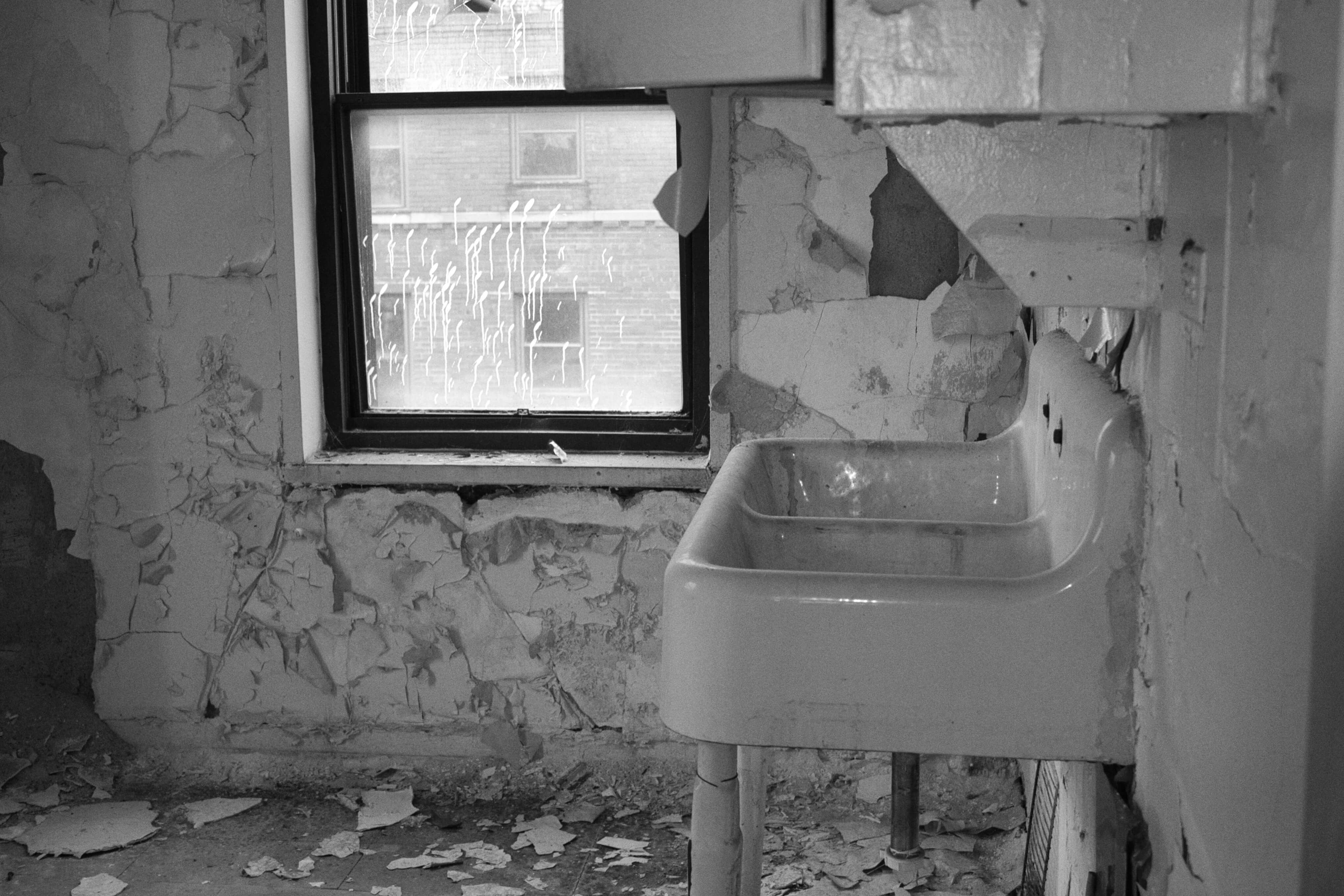
The house needs work. Maybe a lot of work. Deferred maintenance is incredibly common — especially if the previous owner was elderly or ill in their final years. Roof issues, outdated electrical, plumbing problems, foundation concerns. The stuff that’s been quietly getting worse for a decade.
It’s full of stuff. A lifetime of belongings. Furniture, clothes, paperwork, sentimental items mixed in with junk. Sorting through it is emotionally draining and physically exhausting, especially when you’re grieving.
You don’t live nearby. Managing a property from out of state — dealing with the lawn, the pipes freezing in winter, making sure it’s not getting broken into — is a real burden.
Multiple heirs don’t agree. One sibling wants to keep it. Another wants to sell immediately. A third wants to rent it out. These disagreements can stall everything.
There are liens or back taxes. Sometimes the previous owner fell behind on property taxes or took out a home equity loan you didn’t know about. These get resolved at closing, but they’re a surprise nobody wants.
Your Options for Selling
You’ve got three basic paths:
List It With an Agent
The traditional route. An agent lists the property on the MLS, markets it, handles showings, and negotiates with buyers.
Pros: You’ll likely get the highest sale price in a normal market.
Cons: The house probably needs repairs and cleaning before it’s show-ready. You’ll pay 5-6% in commissions plus closing costs. The process takes 60-90 days on average — and that’s after you’ve spent time and money getting it ready. If the house needs significant work, many retail buyers won’t touch it.
Sell It Yourself (FSBO)
Pros: No commission.
Cons: You’re doing the work of a real estate agent while also managing an estate, possibly from another state. Most FSBO sales take longer and often end up netting less than agent-assisted sales.
Sell Directly to a Local Investor
You sell the property as-is to a cash buyer. No repairs, no showings, no waiting for bank financing.
Pros: Fast closing (often 2-4 weeks), no repair costs, no commissions, the house can be full of stuff — you take what you want and leave the rest.
Cons: The offer will be below full market value. That’s the trade-off for speed, convenience, and certainty.
What to Watch Out For
Are they local? Someone who actually lives and invests in Akron is going to treat the property — and you — differently than a national franchise or a wholesaler who’s never set foot in Summit County.
Do they actually buy the properties? Many “cash buyers” are actually wholesalers — they put your house under contract and then sell that contract to someone else. Ask directly: “Are you the one buying this house, or are you assigning the contract?”
Can they show you their work? If someone says they renovate houses, ask to see their portfolio. Most companies in Akron talk about buying houses. Very few can show you what happens after the sale.
Do they pressure you? A legitimate buyer will give you a written offer and time to think about it. If someone is pressuring you to sign today, that’s a red flag.
How We Think About Inherited Properties
We’re West Hill Management. We buy houses across Summit County, and inherited properties are a significant part of what we do.
But here’s what makes us different from most buyers: we don’t flip. We don’t wholesale. Every single property we’ve ever purchased, we still own.
When we buy an inherited house, we gut-renovate it — drainage, foundation, plumbing, electrical, everything. Systems first, finishes second. Then we rent it to quality tenants who take care of it, and we hold it for the long term.
We’re a multi-generational Akron family. Our grandfather worked at Goodyear for 44years and retired into rental property. Our dad bought rough houses and rehabbed them on nights and weekends with us tagging along. We came back to Akron in 2019 after years away, and we’ve been doing this full-time ever since.
We’ve renovated tons properties across a bunch of neighborhoods in Summit County. Zero flipped. We still own and manage everything.
If that matters to you — and it matters to a lot of the families we work with —we’d be happy to have a conversation.
No pressure. No obligation. Just a straight forward talk about what makes sense for your situation.
Contact us or call (330) 661-9885.