
For sixty years, the Chapel Hill Mall was the center of gravity for this whole part of northeast Akron. Then it died — slowly, the way malls do, until it finally closed and sat there as the neighborhood's biggest question mark. Here's the part most people haven't caught up to: it's not a question mark anymore.
What's happening in Chapel Hill right now
The mall is becoming a business park. The old Chapel Hill Mall was bought by Industrial Commercial Properties, which is redeveloping it into a light-industrial and office park expected to create around 400 jobs — roughly $20 million in acquisition and renovation, including a $6 million facade, interior, and landscaping refresh. A dead mall becoming a 400-job employment center is one of the better outcomes a neighborhood like this could hope for.
Companies are already moving in. Retail-design firm OnQ relocated into part of the old mall, and the campus now houses more than 150 employees across several companies — OnQ, Craft 33, Quantix, and Driverge. As OnQ's founder put it, “We've brought life back to this mall.” Jobs on that site mean daily foot traffic, paychecks spent nearby, and a reason for the surrounding blocks to hold and grow.
The Howe Avenue corridor anchors the rest. The Howe Avenue retail strip still gives the neighborhood the everyday amenities families want within a few minutes' drive. The commercial base here isn't disappearing; it's changing shape.
Why the houses here are what they are
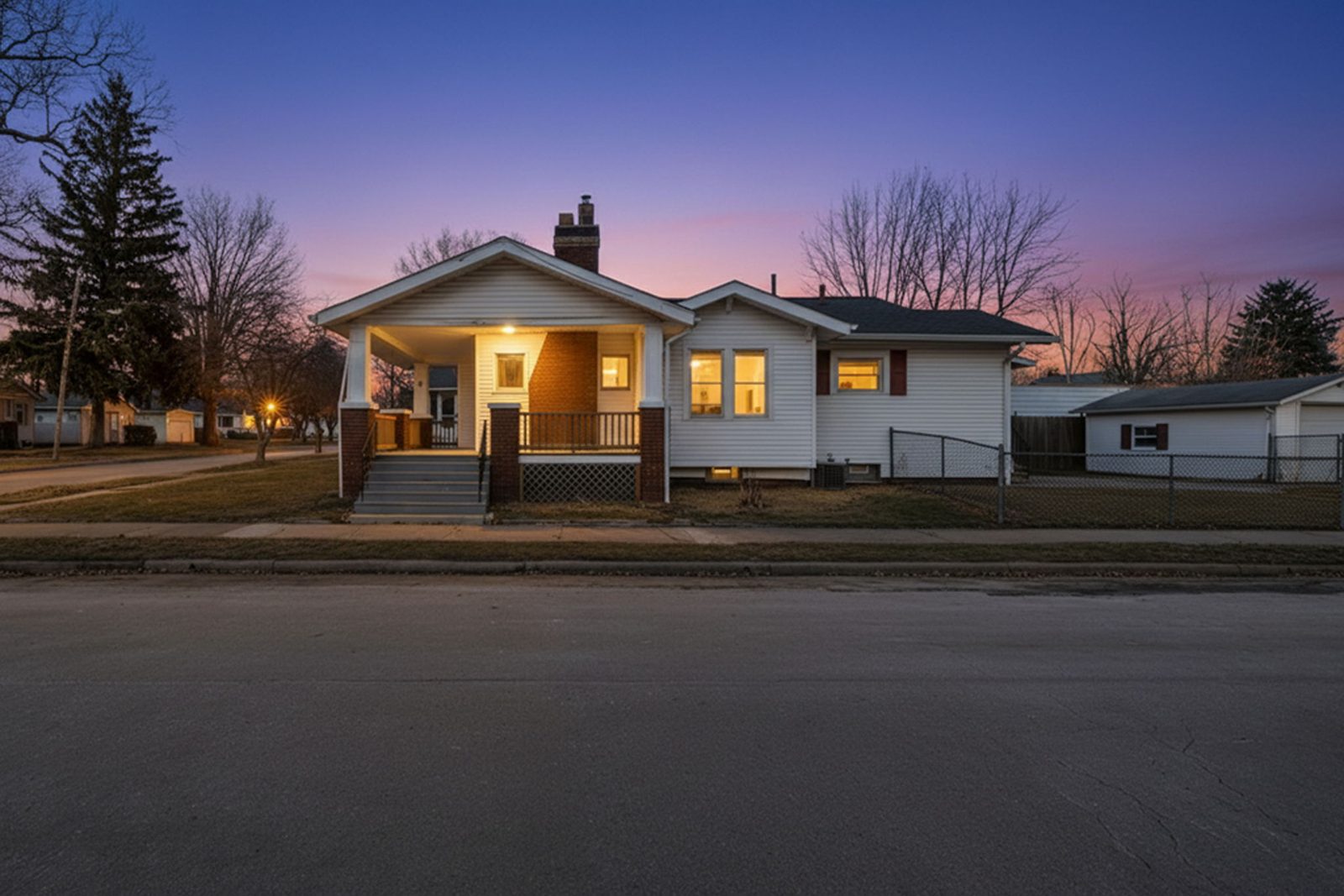
Chapel Hill's residential streets are lined with post-war ranches and Cape Cods, solid and modest, and priced right in the middle of the Akron market. That middle-of-the-road pricing is the opportunity: when a nearby anchor goes from blighted mall to working business park, the homes around it are usually the last thing to reprice. Owners thinking about selling a Chapel Hill house for cash should understand that trajectory before they price it.
Chapel Hill by the numbers
We pulled every home in Chapel Hill from Summit County's parcel records and lined it up against the other 22 neighborhoods in Akron. A few things stand out.
- Newer than most of Akron. The median Chapel Hill home was built in 1962, twenty years after the city median. Nearly half went up in the 1960s and '70s, four times the city share, and 43% are ranches.
- Middle of the market, not the bottom. The county's median appraisal is $142,850, 10th of 23 neighborhoods and about 20% above Akron's $118,570.
- Smaller houses. The median home is 1,176 square feet against 1,261 citywide, which fits a neighborhood of ranches.
- More two-families than most. About 1 in 10 homes is a two- or three-family, compared with about 1 in 17 across Akron.
- Mostly owner-occupied. 71% of tax bills go to the house itself, compared with 64% citywide.
What this means if you own a house here
If you own in Chapel Hill, you're holding an affordable home next to a site that just went from the neighborhood's biggest liability to one of its biggest assets. That's a genuinely good position — and the kind of transition that rewards patient, long-term ownership over a quick flip.
We're a local, family-owned team that buys houses in cash across Summit County, and we don't flip and we don't wholesale. Every property we buy, we renovate properly and keep — an investment in the block, not a bet on the next 90 days.
If you want a confidential cash offer on a Chapel Hill home, here's how we buy houses in Chapel Hill, or call or text us at (330) 661-9885. We respond within one business day.